
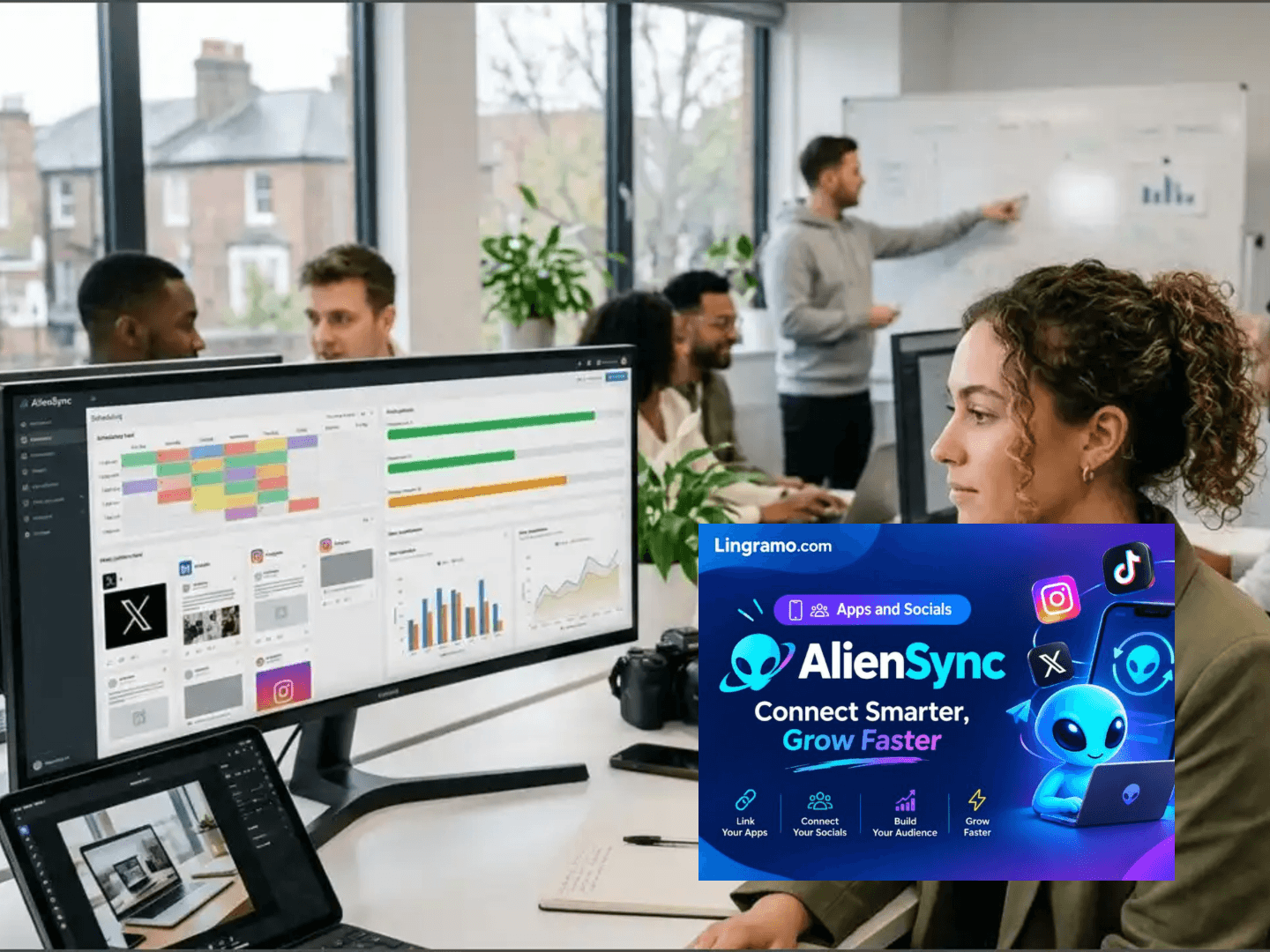
The search for “app and socials aliensync” leads to websites claiming to offer a revolutionary platform for digital connectivity. However, independent security scanners and web analysis tools have flagged these domains as suspicious, with low trust scores and unverifiable claims about any functional product. This article examines what exists online, what can be verified, and what remains uncertain.
What Is App and Socials Aliensync?
The term “app and socials aliensync” appears across several websites, most notably aliensync.fun and aliensync.com. These sites describe a platform designed to merge collaboration tools, video communication, and social engagement into a single digital environment. The About page on aliensync.fun states the site aims to be “a hub for innovation, learning, and digital entertainment” with tools for networking and discovery.
The website claims to offer features that bridge productivity and social interaction. Articles on the site describe adaptive algorithms that learn user preferences, encrypted communication channels, and integrated dashboards for managing social media accounts. The platform is presented as a solution to digital fragmentation, where users currently juggle dozens of separate apps and social networks.
The Problem With Verifying These Claims
Despite the detailed descriptions, no independent evidence confirms that a working app or social platform called Aliensync actually exists. The descriptions come almost entirely from the Aliensync websites themselves, which creates a circular problem. A document analyzing the site notes that Aliensync’s own articles provide “conflicting descriptions of whether it is primarily an editorial concept or an operational software platform”.
This distinction matters. A website publishing articles about a product is not the same as that product being real and available. The analysis further states that social integrations, dashboards, APIs, SDKs, automation, and mobile features are “described, but several remain difficult to verify independently”. No app store listing, no downloadable software, and no independent product review could be located.
What Security Scanners Found
Independent security tools have raised significant concerns about the Aliensync domains. Gridinsoft’s analysis of aliensync.com resulted in a trust score of 31 out of 100, classifying the site as a “suspicious website”. The report cited limited website popularity, with a global rank of approximately 2,442,865, and noted that the domain owner’s identity is hidden.
Gridinsoft’s assessment recommended that most people “best completely avoid it”. The report also flagged the site’s involvement with cryptocurrency content, warning that the irreversible nature of crypto transactions and the decentralized nature of digital assets provide limited recourse for fraud. Scamadviser’s independent evaluation also returned a low trust rating, reinforcing the caution advised by Gridinsoft.Quick Bio
Additional Context:
Lorenzo Kirkpatrick operates a web design business called Kirkpatrick Web based in Birmingham, Alabama . He runs Alien Sync Interactive, described as a small independent game and interactive media design studio .
Additional Risk Factors
MalwareTips conducted a separate scan and found that aliensync.com operates as a “tech and crypto editorial site that publishes generic articles and includes affiliate-style links to gambling domains”. While no malware was detected on the site itself, the report noted that links to unregulated offshore casinos create “moderate risk for visitors who follow those links”.
The domain registration history adds another layer of opacity. According to WHOIS records, aliensync.com was registered on June 17, 2021, through GoDaddy, with the owner’s identity concealed behind a privacy service. The site uses WordPress as its content management system and is hosted on Cloudflare infrastructure. These technical details are neutral on their own, but combined with the hidden ownership and low traffic, they contribute to the overall pattern of unverifiability.
What the Site Says About Itself
The Aliensync websites publish extensive descriptions of features that sound compelling. Articles describe AI-driven chatbots that manage schedules and suggest content, predictive insights that help users avoid burnout, and multi-language support for global collaboration. Another article claims the software offers automation for scheduling posts, sending reminders, and compiling reports, with intelligent workflows that adapt to business conditions.
These descriptions are polished and detailed. But they read more like aspirational marketing copy than documentation of existing functionality. The contact page article on aliensync.fun discusses “contact page aliensync” as a design model and philosophy rather than a functioning customer support system. The article describes how AI-assisted interaction “can feel personal when thoughtfully implemented,” using conditional language that suggests theory rather than practice.
Comparing Aliensync to Established Alternatives
For readers seeking genuine tools to synchronize apps and social media, established platforms provide verifiable evidence of working software. The analysis document notes that “established products such as Buffer, Zapier and Make provide much clearer public evidence when working software is required today”. These services have public documentation, user reviews, app store presence, and transparent company information.
The comparison highlights a key difference. Buffer, founded in 2010, has a known leadership team, published pricing, and years of user feedback. Zapier, launched in 2011, integrates with thousands of applications and has verifiable customer support channels. Aliensync offers none of these transparency markers. The absence of comparable evidence is itself a significant finding.
The Bottom Line on App and Socials Aliensync
Based on available evidence, “app and socials aliensync” refers to content websites that publish articles about digital connectivity, cryptocurrency, and social media tools. No independent verification confirms that a functional app or social platform exists. Security scanners have flagged the domains as suspicious, with low trust scores and hidden ownership.
The recommendation from multiple security sources is clear: avoid providing personal information, connecting social accounts, or downloading anything from these sites. Readers interested in digital synchronization tools should look to established platforms with verifiable track records. Until Aliensync provides transparent ownership, independent product verification, and a clear operational history, caution remains the most reasonable response.
FAQs About App and Socials Aliensync
Is Aliensync a real app or social platform?
No independent evidence confirms that Aliensync exists as a functional app or social platform. The descriptions of its features come entirely from the Aliensync websites themselves, which creates a circular verification problem. Security scanners and web analysis tools have found no app store listing, downloadable software, or independent product reviews that would confirm the platform is operational.
What did security scanners find about aliensync.com?
Gridinsoft assigned aliensync.com a trust score of 31 out of 100, classifying it as a “suspicious website”. The scan cited limited website popularity, with a global rank of approximately 2,442,865, hidden domain ownership, and cryptocurrency-related content. Scamadviser’s independent evaluation also returned a low trust rating, reinforcing the caution advised by Gridinsoft.
Does the site link to any risky external content?
Yes. MalwareTips found that aliensync.com operates as a tech and crypto editorial site that includes affiliate-style links to offshore gambling domains. While no malware was detected on the site itself, the report noted that links to unregulated offshore casinos create moderate risk for visitors who follow them.
Can I trust the features described on the Aliensync website?
The features described, such as AI-driven algorithms, encrypted communication, and social media automation, are self-reported claims that have not been independently verified. An independent analysis noted that social integrations, dashboards, APIs, and automation are “described, but several remain difficult to verify independently”. No public record of a registered company operating the platform could be found.
What should I do if I want to use app and socials aliensync?
Security sources recommend avoiding the site entirely. Gridinsoft advised that most people “best completely avoid it”. Do not provide personal information, connect social accounts, or download anything from these domains. For genuine app and social synchronization tools, established platforms like Buffer, Zapier, and Make offer verifiable public evidence of working software.
