
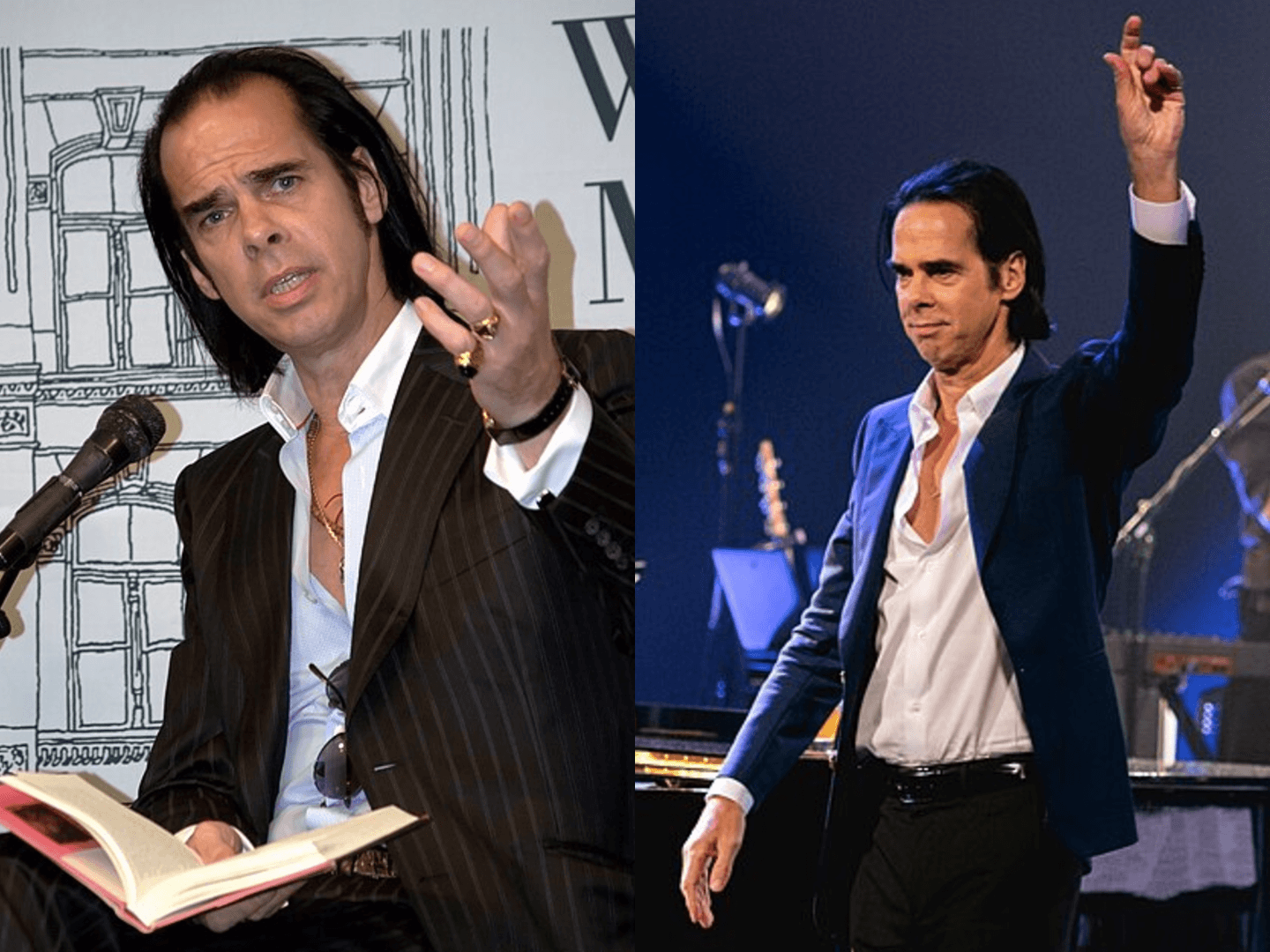
Nick Cave Brightonn represents one of modern music’s most enduring artist-city relationships. The Australian musician lived in the English seaside town for over two decades, drew inspiration from its streets for some of his most celebrated songs, and returned in 2026 for what became the largest ticketed event in Brighton’s history.
A Home Away From Home
Nick Cave first settled in Brighton in the early 2000s, following his wife Susie Bick, who had chosen the city. The musician initially described his relationship with Brighton in practical terms, telling the BBC that moving there “wasn’t my idea” and admitting he usually lasted about three years in any place before moving on . The 2014 documentary 20,000 Days On Earth captured this period, filming extensively in Brighton and at Miloco’s The Retreat Recording Studio, where parts of the film’s soundtrack were also produced .
Cave lived in a Grade I listed townhouse in Lewes Crescent, and Brighton became the backdrop for both his writing and family life . In the documentary, he described the city simply as “the place” where he could work without interruption. Directors Iain Forsyth and Jane Pollard noted that Brighton’s constantly changing weather posed enormous technical challenges during filming, but they deliberately avoided the Brighton of cinematic classics like Quadrophenia, focusing instead on the city as Cave experienced it .
Brighton in the Music
The city seeped directly into Cave’s lyrics, most notably on Jubilee Street, a track from the 2013 album Push the Sky Away. The Guardian described how the song takes its name from a real Brighton location featuring a hairdresser, the Jubilee Library, and a branch of Tesco Express, all improbably woven into Cave’s characteristic lyrical concerns of violence, sex, and apocalyptic visions . At the 2026 Preston Park concert, Cave confirmed the song’s geographical origins, gesturing toward town and joking about the “giant Five Guys hamburger joint” erected near the street .
Brighton also provided the setting for Cave’s second novel, The Death of Bunny Munro, and remained central to his creative life throughout his residence .
Tragedy and Departure
In 2015, Cave’s teenage son Arthur died in the Brighton area following a fall from a cliff. The tragedy prompted Cave and his family to leave the city for Los Angeles, seeking distance from the overwhelming grief associated with the place . German publication WELT characterised Brighton as the site of both Cave’s “best years as a poet and singer” and his “greatest tragedy” .
The departure was not permanent. Coverage from 2026 indicates the family was eventually drawn back to Brighton, with the city’s “kindness” and “open-hearted residents” proving impossible to resist . Cave told the BBC upon returning, “This place is wonderful!” .Quick Bio: Nick Cave
| Field | Information |
|---|---|
| Full Name | Nicholas Edward Cave |
| Age | 68 (born September 22, 1957) |
| Birthplace | Warracknabeal, Victoria, Australia |
| Nationality | Australian |
| Profession | Singer-songwriter, author, screenwriter, composer |
| Height | 6’2″ (1.89 m) |
| Education | Caulfield Grammar School; studied painting at art school (dropped out) |
| Years Active | 1970s–present |
| Notable Works | Murder Ballads (1996), Push the Sky Away (2013), Skeleton Tree (2016), Ghosteen (2019), Wild God (2024); novel The Death of Bunny Munro (2009) |
| Awards | ARIA Hall of Fame (2007); Chevalier des Arts et des Lettres (2025); honorary doctorates from Monash University (2008) and University of Dundee (2010) |
| Net Worth | Estimated at approximately $8–10 million (unverified) |
| Spouse/Partner | Susie Bick (married 1999) |
| Social Media | Instagram, Facebook, X; official site nickcave.com |
The 2026 Homecoming
In September 2025, Cave announced that Nick Cave & The Bad Seeds would play Preston Park on 31 July 2026, their only UK show of the year . Cave framed the announcement personally: “I am thrilled beyond words to return to my beloved Brighton with The Bad Seeds to play Preston Park. It’s a homecoming! It’s going to be big, bad and beautiful” .
The concert sold out, with support from The Flaming Lips, English Teacher, Cate Le Bon, and Warmduscher . On the morning of the show, Cave surprised fans with an impromptu rooftop performance at Resident, Brighton’s independent record shop, which he called “the best fucking record shop in the world” . A limited edition 10-inch picture disc of Jubilee Street was released to mark the occasion .
Rolling Stone UK described the atmosphere as a “joyful sermon,” noting that tickets “sold out instantly” and exclusive merchandise queues “snaked around the entire festival site” . The setlist spanned Cave’s four-decade career, from From Her to Eternity to Red Right Hand and The Mercy Seat, with Warren Ellis delivering what the reviewer called a “trance-like” performance . Kylie Minogue made a surprise appearance for Where the Wild Roses Grow, their first live performance of the duet since 2018 .
Cave later revealed in his Red Hand Files newsletter that his manager had informed him the show was “the largest ticketed event in Brighton’s history” . He wrote of the Bad Seeds, “There is simply no other group that can summon pure chaos and the most acute intimacy almost simultaneously” . Reflecting on the city itself the morning after, he described Brighton’s “defiant, lunatic, almost melancholic energy” and expressed “nothing but love” for the town .
A Relationship That Endures
The 2026 concert transformed what could have been a standard tour stop into a city-wide event. Local cinema screenings of Cave’s favourite films, pop-up merchandise, and the sheer scale of the turnout demonstrated that Brighton’s affection for Cave is reciprocated in kind. As Clash Magazine observed, the decision to host his only UK show in Brighton “took on weight as a beautiful homecoming moment” . For an artist who once saw the city merely as a quiet place to work, Brighton has become something far more significant: a home he chose to return to, and a community that welcomed him back without reservation.
Q: When did Nick Cave move to Brighton and why?
Nick Cave moved to Brighton in 1999 because his wife Susie Bick chose the city. He told the BBC it “wasn’t my idea” and that he “just kind of followed her really.” Despite initial reservations, he lived there for more than two decades before leaving for Los Angeles in 2015.
Q: Which Nick Cave songs are connected to Brighton?
“Jubilee Street” from the 2013 album Push the Sky Away is the most direct example. Cave confirmed at the 2026 Preston Park show that the title refers to a real Brighton location near the main library. “Wide Lovely Eyes” is also Brighton-specific, with Cave introducing it as being about “Brighton beach, the Kemp Town end.”
Q: Why did Nick Cave leave Brighton in 2015?
Cave and his family left Brighton after the death of his son Arthur, 15, who fell from a cliff in Ovingdean in 2015. Cave said they moved because they were “triggered too much” by living so close to where Arthur died. The family relocated to Los Angeles before eventually returning.
Q: What happened at Nick Cave’s 2026 Brighton homecoming show?
Nick Cave & The Bad Seeds played their only UK show of 2026 at Preston Park on 31 July 2026, with 50,000 attendees. On the morning of the show, Cave performed a surprise rooftop gig at Resident Music in The Lanes. Support acts included The Flaming Lips, English Teacher, Cate Le Bon, and Warmduscher.
Q: Is The Death of Bunny Munro set in Brighton?
Yes. Cave’s 2009 novel is set in Brighton around 2003, and many locations and street names in the book relate to real places close to Cave’s own home. Cave said he “started off to write about Brighton” and that the seafront scenes were based on the view outside his house.
